Ask most sellers in La Habra Heights what they're bracing for and they'll say the septic system. It's the thing everyone warns you about, the line item that shows up in every home inspection story passed between neighbors on Hacienda Boulevard or up near Powder Canyon. It's a real cost and a real delay. But in 2026, it's rarely the thing that actually stalls a closing.
The thing that stalls a closing now is whether your buyer can get insured at all, and whether that insurance shows up early enough in escrow to keep their loan on track. That's a different problem than the one most sellers are preparing for, and it changes the order in which you should be lining things up before you list.
A City Built Without a Sewer
Start with the fact that shapes almost everything else about selling a home here. La Habra Heights has no citywide sanitary sewer system. The city's own municipal code states plainly that the sewage effluent of the overwhelming majority of homes, cited at 97 percent of residential structures, is disposed of through cesspools and leach lines rather than a sewer connection. That's not a quirk of a few older streets. It's the baseline condition of the housing stock.
There's a wrinkle worth knowing if you're near any stretch where public sewer has crept closer over the years. Under the city's own rule, if a public sewer line sits within 200 feet of your property, the city won't issue a permit to repair a failing septic system. Instead, you're required to connect to the sewer when the system fails. Most sellers never think to check this distance before listing, and it can change whether a buyer's septic contingency ends with a repair estimate or a sewer connection estimate, which are not the same conversation.
None of this means a septic system is a red flag on its own. Buyers who shop in the Heights generally understand that land, privacy, and horse-friendly lots come with a private wastewater system attached. What catches sellers off guard isn't the existence of the septic system. It's not having the pump report and inspection paperwork ready before a buyer's lender asks for it.
Roads Built for a Different Era
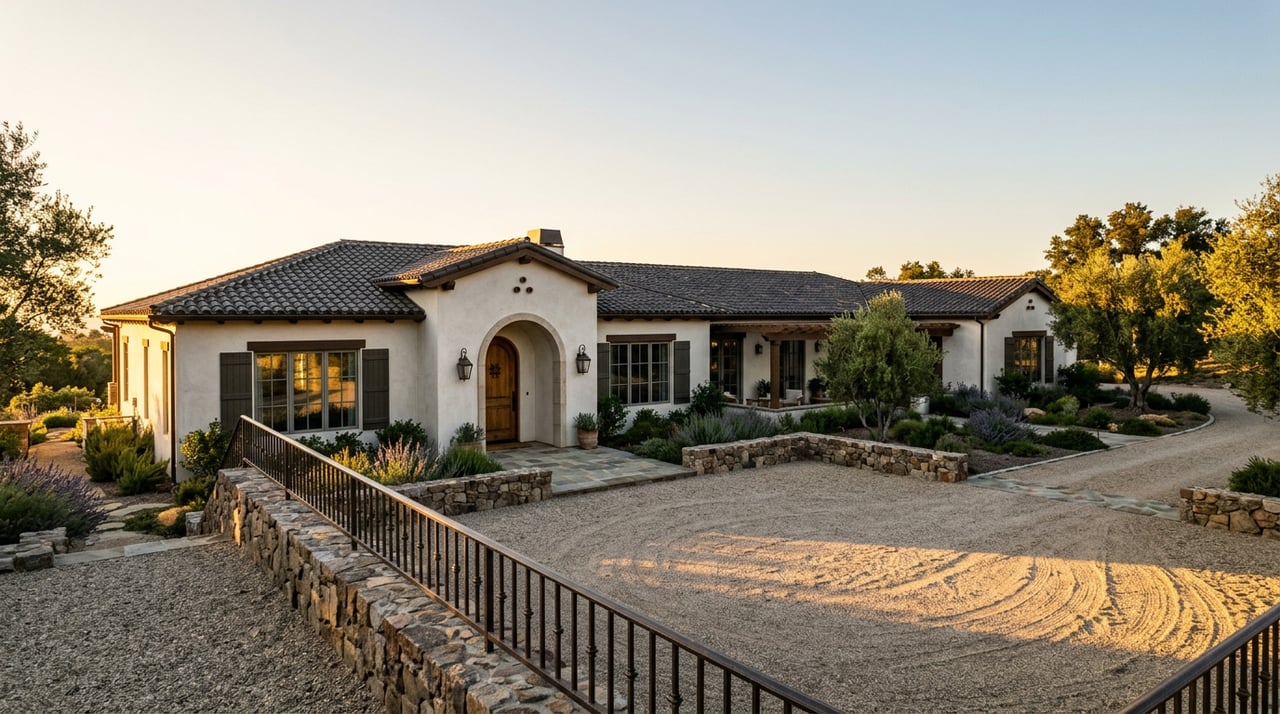
The second thing that shows up in an LHH escrow but rarely in a flatland comp is the road itself. The city's code describes its own street network as curvy and narrow, with 18 feet of paving in many locations and no curbs, gutters, streetlights, or sidewalks. That description exists in the code for a reason. It's the standard the city uses when it evaluates fire apparatus access to a property, and it's part of why the city runs its own paid-volunteer Fire Department rather than folding entirely into a standard county contract. That department handles fire prevention and suppression locally, along with the weed abatement and brush clearance that keeps those narrow roads passable when conditions turn dry.
A longer driveway, a steeper grade, or vegetation crowding a turnaround isn't just a curb appeal issue here. It's the kind of detail that shows up in a fire-access review during escrow, and it's worth walking your own property with that lens before a buyer's inspector does it for you.
Here's how that changes the sequence of a typical sale compared to a standard tract closing nearby.
| Step | Standard OC tract closing | Typical La Habra Heights closing |
|---|---|---|
| Water and waste | Public sewer, no inspection needed | Septic or cesspool inspection is a standard contingency |
| Access review | Rarely an issue | Driveway grade and fire-access review often factor into underwriting |
| Insurance | Usually secured in days | Often requires shopping FAIR Plan or surplus-lines options before a quote lands |
| Financing tier | Conventional loan limits typically apply | Price points frequently require jumbo financing, adding a pre-approval step |
Where the Real Bottleneck Moved
This is the part that's changed the most recently, and it's the part most sellers haven't caught up to yet. Wildfire insurance has become the underwriting bottleneck in hillside Los Angeles County communities, and La Habra Heights sits squarely in that exposure. As of March 2026, roughly 41 percent of residential structures in the state's highest-risk ZIP codes were covered by the California FAIR Plan rather than a standard admitted carrier, and the FAIR Plan had filed for a 35.8 percent overall rate increase, its largest in seven years, targeted for April 2026. In the most extreme fire-hazard zones, annual premiums now run anywhere from the low thousands to $25,000 or more, and a lender won't close a loan without proof of coverage in hand.
That timing matters more than it sounds. A buyer can be fully qualified, fully in love with the house, and still get stuck for weeks while a broker works through the coverage ladder, from a standard carrier to surplus lines to a FAIR Plan policy paired with a difference-in-conditions wrap to fill the gaps a fire-only FAIR Plan policy leaves open. If that process doesn't start until after the appraisal comes back, it becomes the reason a closing date slips, not the septic report and not the fire-access review.
A house doesn't usually fail to close in La Habra Heights because of what's underground. It stalls because of what an insurer decides weeks after everyone assumed the hard part was already behind them.
What to Line Up Before You List
If you're preparing to sell here this fall, the order of operations is worth rethinking. A few things worth doing before a buyer ever walks the property:
- Get a current septic or cesspool inspection and pump report on hand, along with any permits or as-built diagrams the county has on file for the system. It shortens the conversation when a buyer's lender asks for it.
- Check whether public sewer runs within 200 feet of your lot line. If it does, know now whether you're looking at a repair scenario or a connection requirement if the system ever fails.
- Document your defensible space clearance and any fire-hardening already done, including roof material. Homes with documented mitigation and Class A roofing tend to move further up the insurance ladder toward standard coverage instead of landing on the FAIR Plan by default.
- Get your own insurance quote before you list, even if you're not the one who'll need the policy. Knowing what a buyer is likely to pay, and how long that quote took to secure, lets you set realistic expectations in the listing conversation instead of discovering the number during a stalled escrow.
None of this eliminates the friction. It just moves the friction earlier, where you have room to manage it instead of reacting to it.
A Few Questions Before You List
Does every home in La Habra Heights need a septic inspection to sell? Nearly every home in the city relies on a cesspool or leach line rather than public sewer, so a septic evaluation is a standard part of due diligence here even when it wouldn't be expected in a neighboring flatland city.
Will a FAIR Plan policy satisfy a buyer's lender? Lenders generally require a difference-in-conditions wrap alongside a fire-only FAIR Plan policy to approximate standard homeowners coverage. Buyers who haven't budgeted for that combined cost sometimes discover it later in the process than they should.
Does the city inspect brush clearance before a sale? The La Habra Heights Fire Department handles weed abatement and brush hazard removal as an ongoing responsibility, not a point-of-sale requirement, but documented clearance still strengthens a buyer's insurance application.
If you're thinking about listing a home in La Habra Heights and want to know where your specific property sits on the insurance ladder before a buyer's lender tells you, that's exactly the kind of groundwork Christine Kennedy and the Kennedy team walk through with sellers first, not last. Get a Free Home Valuation and we'll start with the questions that actually decide your timeline.